Homesteading in an Apartment: What’s Actually Possible (and Where to Start)
People assume homesteading means land. A house, a yard, maybe chickens. That assumption stops a lot of people before they start — because they’re renting an apartment and figure none of it applies to them.
It does.
Homesteading isn’t a property type. It’s a set of practices: growing some of your own food, preserving what you have, fermenting, reducing waste, building skills that replace purchases. All of those things scale down. You won’t have a root cellar or a half-acre vegetable plot, but you can grow food on a windowsill, ferment vegetables in a jar, compost in a bucket, and bake your own bread — and every one of those things is real homesteading.
The urban homesteading for beginners guide covers the full picture. This article is specifically for apartment dwellers who want to know what works in a small rented space — the actual practices, what they require, and where to start.
What Homesteading Looks Like Without Land
The land-based version of homesteading is about food production, resource management, and self-reliance at scale. The apartment version is the same thing, at a different scale.
That’s the reframe that matters. Apartment homesteading isn’t a lesser version of the real thing. It’s a smaller implementation of the same principles. Growing 10% of your vegetables in pots is less than growing 60% in a full garden — but it is still real food production. Making your own yogurt doesn’t replace a dairy cow — but it replaces a purchase and builds a skill. The value of any homesteading practice doesn’t start at the farm gate. It starts the moment you stop being entirely dependent on something external.
The apartment version is constrained in scale. It is not constrained in substance.
The Five Core Apartment Homesteading Practices
1. Growing Food in Containers
Container growing is the most visible form of apartment homesteading and the one most people try first. It works.
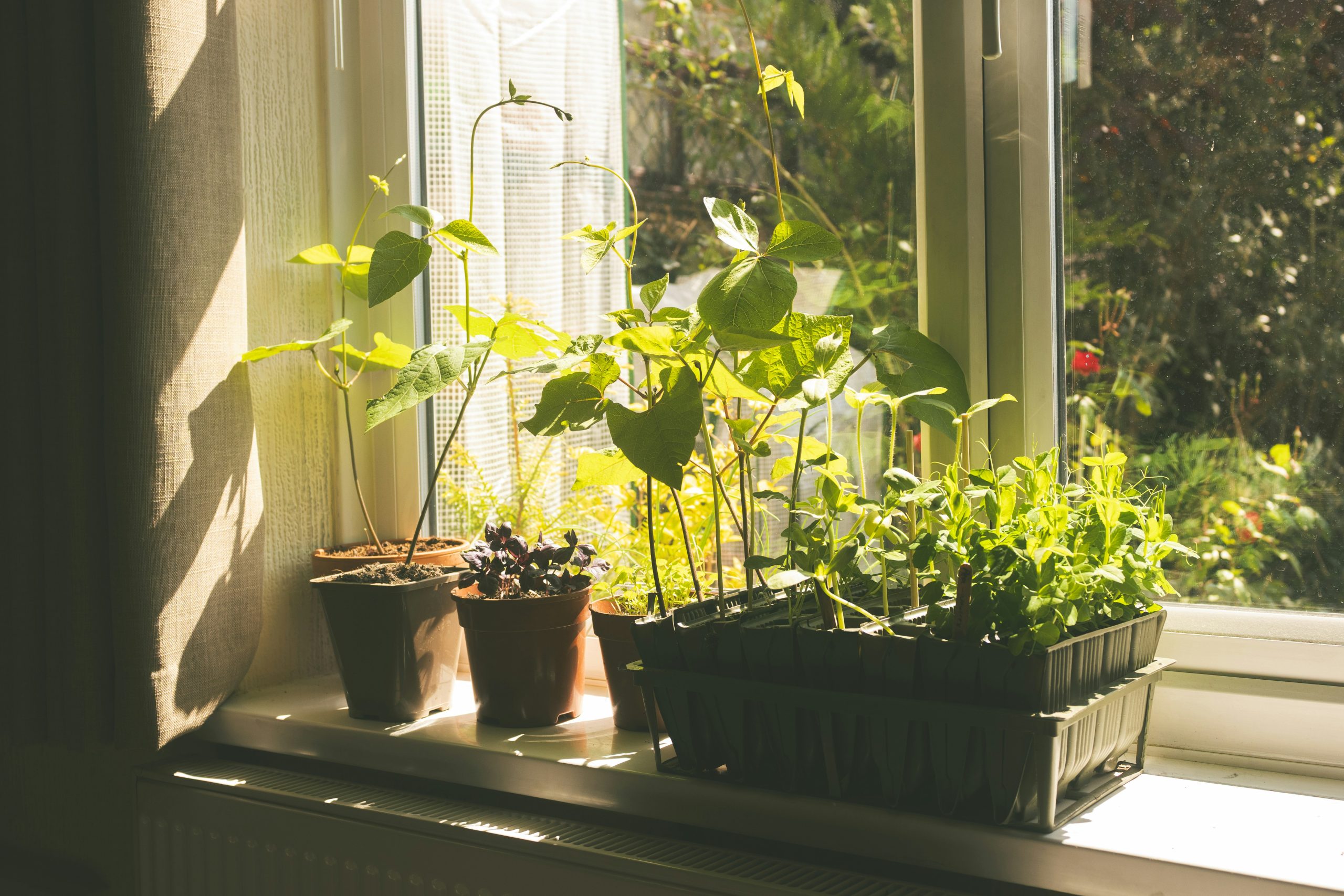
Balconies and windowsills will support a genuine food garden if you approach them correctly. The limiting factor is sunlight, not space. A sun-facing balcony with six or more hours of direct sun per day can grow tomatoes, peppers, dwarf beans, and leafy greens. A shadier windowsill can still grow herbs, lettuce, and spinach. In the Northern Hemisphere, a south-facing window or balcony gets the most sun. In the Southern Hemisphere (NZ, Australia), that’s north-facing.
Cherry tomatoes in a 20-litre pot, a window box of mixed salad greens, and a few herb pots will between them supply real kitchen produce through a growing season. None of that requires a garden.
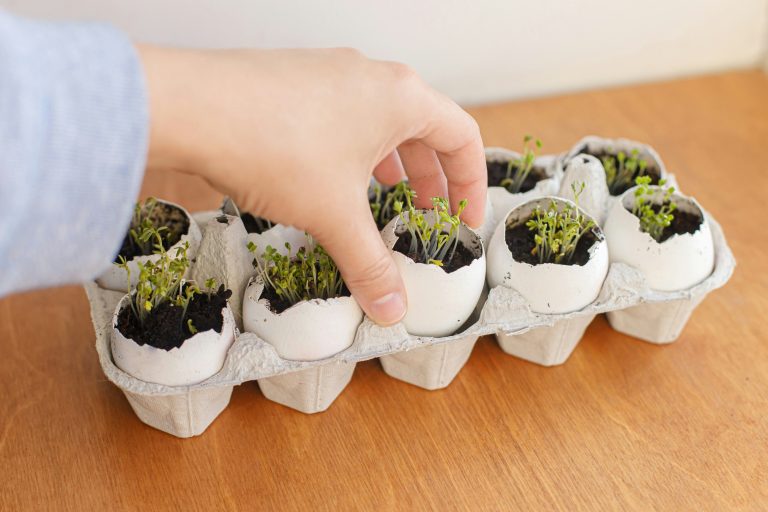
If you don’t have balcony access, microgreens are the highest-yield indoor option. Grown under a standard grow light or in a bright windowsill position, microgreens (sunflower, pea shoots, radish, broccoli) go from seed to harvest in 7–14 days and grow in a shallow tray on your counter. They don’t need deep soil, outdoor conditions, or a lot of space. For a full walkthrough, see our microgreens growing guide.
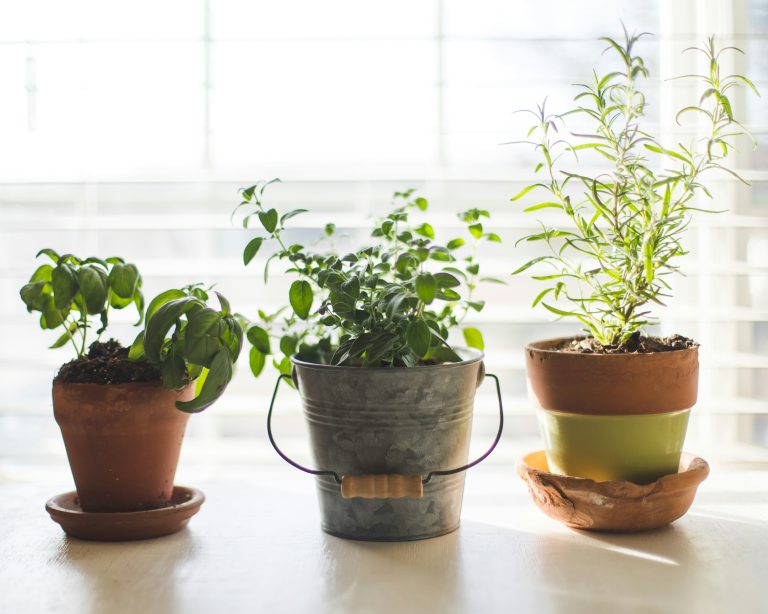
For herbs specifically, a bright windowsill and a pot each of basil, chives, parsley, and mint covers most of what a kitchen uses on a daily basis. More detail on what works where in our guide to growing herbs indoors. For the full balcony vegetable setup — containers, soil, watering, crop selection — see our beginner’s guide to balcony vegetable gardening.
2. Composting Without a Garden
Composting in an apartment is less obvious than balcony growing, but it’s entirely doable with the right system — and it matters because it closes the loop on your food scraps rather than sending everything to landfill.
Two methods work reliably in small spaces.
Bokashi is a fermentation-based system that processes cooked food, meat, and dairy — things that can’t go into traditional compost. You layer food scraps with bokashi bran (which contains effective microorganisms) in an airtight bucket. The contents ferment rather than rot, so there’s no smell if the bucket stays sealed. After 2–3 weeks, the fermented material is ready to bury in a garden bed or add to a larger compost system. If you don’t have outdoor space to bury it, you can give it to someone with a garden or check if your local council has a community compost drop-off. The bokashi kit — bran and bucket — is available from most garden centres and online.
Worm farming (vermicomposting) uses red wiggler worms (Eisenia fetida) to process vegetable scraps and paper waste into castings that function as a concentrated soil amendment. A small stacked worm farm sits under a kitchen bench or on a balcony. It processes fruit and vegetable scraps, coffee grounds, eggshells, and paper. It does not smell if managed correctly. The liquid produced (worm leachate) can be diluted and used as a liquid plant feed. Starter kits with worms are available from most garden centres and online.
Neither system requires a garden. Both require a bit of management and learning the boundaries of what each method can handle.
3. Fermenting and Preserving
Fermentation is one of the most apartment-compatible homesteading practices because it needs almost nothing: a jar, some salt, vegetables, and time.
Lacto-fermented vegetables — kimchi, sauerkraut, pickles — use naturally occurring Lactobacillus bacteria on the vegetable surface to convert sugars to lactic acid. That acid preserves the vegetables and creates the sour flavour. The method is simple: shred or chop vegetables, add salt (which suppresses harmful bacteria while the Lactobacillus establishes itself), pack tightly into a jar, and keep submerged under brine. Fermentation happens at room temperature over several days to a few weeks, then you move it to the fridge to slow the process and eat over time. No canning equipment, no pressure cooker, no special gear.
Vinegar-based pickling (quick pickles) is faster and easier still. You bring a brine of vinegar, water, and salt to a simmer, pour it over vegetables in a clean jar, and refrigerate. These aren’t shelf-stable preserves — they need the fridge and are used within a few weeks — but they extend the life of produce and reduce waste.
Sourdough is fermentation in a different direction. A sourdough starter is a live culture of wild yeast and lactic acid bacteria maintained in a jar with flour and water. Once active (typically 5–7 days of daily feedings), it leavens bread and will keep indefinitely with regular feeding. The bacteria produce lactic and acetic acids, which contribute both flavour and extended shelf life compared to commercially yeasted bread.
None of this requires specialist equipment. A clean jar, the right ratio of salt to vegetables, and enough patience to let fermentation do its work.
4. Reducing Food Waste and Buying Habits
This practice doesn’t look like homesteading at first glance, but it’s central to the whole system. Homesteading has always been about extracting maximum value from what you have — that applies directly to how you shop, store, and use food.
Buying in bulk where it makes sense — dried legumes, grains, oats, nuts, spices — reduces packaging, lowers cost per unit, and means you’re always stocked with the foundation ingredients. The constraint in an apartment is storage: buying bulk only works if you have dry, airtight containers to store things in.
Batch cooking is the apartment equivalent of food preservation at scale. Cooking a large pot of beans, a grain like brown rice or barley, or a batch of soup and storing portions in the fridge or freezer means less waste from individual ingredients and fewer decisions during the week. It also means buying whole ingredients rather than convenience foods — which tends to reduce cost per meal and reduce packaging waste.
Zero-waste kitchen habits are cumulative: vegetable scraps going to the worm farm or bokashi bucket, bones and offcuts going into stock, citrus peel turned into cleaner or compost, stale bread made into breadcrumbs or croutons. None of these are dramatic. Together, they substantially reduce what your household sends to landfill.
5. Building Skills Instead of Buying
This is the practice with the highest long-term return, and it’s the one that requires nothing except time and a willingness to make something badly the first few times.
Yogurt is made from milk and a small amount of live yogurt as a starter culture. You heat the milk, cool it to the right temperature range (around 40–45°C / 104–113°F is the typical guidance, but check the specific culture you’re using), stir in the starter, and keep it warm for several hours while the bacteria do their work. The equipment needed is a saucepan, a thermometer, and something that holds warmth — a turned-off oven with the light on, a cooler with warm water, or a purpose-made yogurt maker.
Bread — simple no-knead bread — requires flour, water, yeast (or sourdough starter), and salt. The actual hands-on time is around 10 minutes. The rest is resting and rising time. It is not complicated, and the version you make will be better than most supermarket bread.
Cleaning products: a basic all-purpose cleaner from white vinegar and water, a soft scrub from baking soda and liquid soap, a drain cleaner from baking soda followed by vinegar — these replace several commercial products with ingredients that cost very little and store easily. The cleaning science: vinegar (acetic acid) is effective against many common household bacteria and cuts grease; baking soda (sodium bicarbonate) is a mild abrasive and deodoriser. These are not equivalents to commercial disinfectants for medical-grade hygiene, but for routine kitchen and bathroom cleaning, they work.
Every skill you build is one less purchase you depend on. The accumulation of small skills is a genuine shift in self-reliance, even in an apartment.
If you’re ready to act on one of these five practices, the Starter Kit gives you the practical how-to for all of them — written specifically for renters and apartment dwellers with no outdoor space.
The No-Land Homesteader’s Starter Kit is a 45-page practical guide — container gardening, composting in small spaces, seed-saving, fermentation, and food preservation — built specifically for renters and apartment dwellers. $17.
What You Don’t Need
You do not need land, a house, a car, a mortgage, or a large budget to start apartment homesteading.
You need a kitchen. You need at least one light source — a window, or a small grow light. You need clean jars and some basic dry goods. The startup cost of getting meaningfully started — a worm farm starter kit, some seed packets, a bag of potting mix, a few jars — is modest for a first round of practices.
What you do need is some tolerance for learning curves. The first batch of kimchi might be too salty or too soft. The first sourdough loaf might be dense. The worm farm will take a few weeks to find its rhythm. This is normal and not a sign of failure.
If you’re a renter with specific concerns about what’s allowed in your lease and what’s renter-appropriate — container vs. in-ground growing, lease considerations, renter-friendly modifications — see our homesteading for renters guide.
How to Start: One Practice at a Time
The most reliable way to fail at apartment homesteading is to try to implement five things at once. You end up with a dying worm farm, an abandoned sourdough starter, three pots of herbs in the wrong window, and a feeling that none of it is working.
The one-at-a-time model works better. Pick one practice. Get one real result from it. Then add the next.
A sensible sequence for someone starting from zero:
- Herbs on a windowsill. Start with chives, parsley, and one other. They’re forgiving, useful in the kitchen immediately, and teach you the basics of container growing — watering, light, drainage — without much risk.
- One ferment. Sauerkraut is the simplest lacto-ferment there is: cabbage and salt, packed into a jar. Make one batch, understand how it works, eat it.
- Composting system. Set up a bokashi bucket or worm farm. Your kitchen is already generating scraps — this step captures them and turns them into something useful rather than landfill.
- Expand growing. Once you know your light situation and have container basics down, add a deeper growing setup — a balcony bed, microgreens trays, a larger pot for tomatoes.
- Skills. Bread, yogurt, cleaning products — add these as you have time and interest.
If you want the container growing, composting, and fermentation steps laid out in one practical guide, The No-Land Homesteader’s Starter Kit was built as a companion for exactly this starting sequence.
There’s no fixed timeline. Some people spend six months on fermentation before they start growing anything. Others go straight for a balcony garden and add preserving later. The point is that each practice you add builds on an established base rather than competing with three half-started projects.
What Apartment Homesteading Can’t Replace
It’s worth being direct about limits.
You cannot run a large-scale food production operation in an apartment. You will not grow the majority of your calories in containers. You cannot keep chickens, goats, or bees in most apartments — and those that allow it are rare exceptions, not the norm.
Full energy independence — solar, rainwater collection, off-grid living — is not possible in a rented apartment.
What apartment homesteading does is reduce dependence at the margins: lower food costs, fewer purchases, more skills, less waste. That matters, but it doesn’t replace the scale of a property-based homestead. If the goal is genuine large-scale food self-sufficiency, you will eventually need land. What apartment homesteading gives you in the meantime is the skills, habits, and understanding to hit the ground running when you do get that space.
Where to Go Next
If you’re starting from scratch, the urban homesteading for beginners guide gives a broader overview of the whole approach. From there:
- Container growing: Balcony vegetable garden for beginners
- Microgreens: How to grow microgreens at home
- Herbs: How to grow herbs indoors in an apartment
- Renter-specific concerns: Homesteading for renters
Start with one thing. Do it until it works. Then decide what’s next.
The Starter Kit is the logical next step — 45 pages of practical instruction covering exactly the practices this article introduced, built for apartment dwellers who are ready to begin.
The No-Land Homesteader’s Starter Kit is a 45-page practical guide — container gardening, composting in small spaces, seed-saving, fermentation, and food preservation — built specifically for renters and apartment dwellers. $17.