How to Start a Balcony Vegetable Garden (Beginner’s Guide for Apartment Dwellers)
My first container garden was three pots on a rented balcony and a lot of guesswork. I killed things. I overwatered, bought the wrong soil, and put a tomato in a pot that was genuinely too small to sustain it. What I learned from that is that balcony growing works — it works really well — but only if you understand what you’re actually working with before you start spending money on plants.
This guide is everything I wish someone had handed me at the beginning.
Before You Start: What to Assess on Your Balcony
Before you buy a single pot, spend a week watching your balcony. What you observe will determine everything: what you can grow, how much you can carry, and whether you’ll be fighting the elements the whole season.
Sunlight: How to Read Your Balcony’s Light
Sunlight is the one thing you cannot fake. Most vegetables need a minimum of 6 hours of direct sun per day to produce anything worth harvesting. Some — leafy greens, herbs — will manage on 3 to 5 hours. But fruiting vegetables like tomatoes, peppers, and cucumbers need full sun, and if your balcony doesn’t provide that, they won’t perform.
Watch your balcony at different times of day over several days. Note where the sun falls at 9am, 12pm, and 3pm. That tells you whether you have full sun (6+ hours of direct light), partial sun (3–5 hours), or shade.
In the Northern Hemisphere (US, UK, Europe) a south-facing balcony gets the most direct sun. In the Southern Hemisphere (New Zealand, Australia) that’s north-facing. After that, position matters: east-facing gets morning sun, west-facing gets afternoon sun, and both can support a decent container garden even if they don’t match the ideal.
Weight Limits: What You Need to Know
This is the safety question most beginner guides skip, and it matters. Balconies have structural weight limits, and a serious container setup — large pots filled with wet soil — is heavier than it looks. A single 40-litre pot of wet potting mix weighs roughly 20–25 kg (45–55 lb). Add three or four of those plus water reservoirs and you’re carrying significant load.
Before you set up a large container garden, check with your building manager or body corporate about the weight limit for your balcony. This is especially important in older apartment buildings. Most modern concrete balconies are built to handle substantial distributed weight, but “most” is not good enough when the alternative is a structural problem. Ask the question. It takes five minutes.
If you can’t get a clear answer, keep containers small and spread the weight across as much floor area as possible rather than grouping everything in one spot.
Wind and Exposure
High balconies and corner balconies can be brutal for plants. Wind strips moisture from leaves faster than roots can replace it, and tall plants — tomatoes, beans, cucumbers — can topple or snap.
Assess honestly: does your balcony get consistent strong wind? If yes, that shapes what you can grow. Leafy greens and low-growing herbs handle wind better than tall fruiting plants. You can also use your railing and nearby walls as windbreaks by positioning pots strategically — just don’t sacrifice sun for shelter.
The Best Containers for Balcony Vegetable Growing
The right container size matters more than the brand or material. Undersized pots are the single most common reason balcony vegetables underperform.
General minimums by crop type:
- Tomatoes and cucumbers: 20–25 litres (5–7 gallons) minimum. Bigger is always better — a half-wine barrel or 30-litre pot will outperform a 15-litre one every time.
- Peppers and beans: 10–15 litres (3–4 gallons)
- Leafy greens, lettuce, spinach, kale: 8–10 litres (2–3 gallons), or a long window box style
- Herbs: 4–6 litres per plant minimum; they don’t like being crowded
Material is less critical. Plastic pots are light, cheap, and retain moisture well — useful on a hot balcony where terracotta dries out fast. Terracotta looks better and breathes more, but it’s heavier and needs more frequent watering. Fabric grow bags are an excellent lightweight option for beginners: they’re cheap, promote healthy root development, and fold flat for storage when the season ends.
Whatever container you use, it must have drainage holes. No drainage holes means waterlogged roots and dead plants. Non-negotiable.
The Best Vegetables for Balcony Containers (Beginner-Friendly)
The answer to “what can I grow on a balcony?” depends almost entirely on how much sun you have. Here’s a direct breakdown.
| Vegetable | Minimum container | Sun needed | Harvest time |
|---|---|---|---|
| Cherry tomatoes | 20 L | 6+ hrs | 60–80 days |
| Lettuce | 8 L | 3–5 hrs | 30–45 days |
| Radishes | 6 L | 3–6 hrs | 25–30 days |
| Peppers | 12 L | 6+ hrs | 70–90 days |
| Spinach | 8 L | 3–5 hrs | 40–50 days |
| Dwarf beans | 10 L | 6+ hrs | 50–60 days |
| Kale | 10 L | 3–5 hrs | 55–70 days |
| Peas | 10 L | 4–6 hrs | 60–70 days |
Full Sun (6+ Hours): Tomatoes, Peppers, Beans, Cucumbers
If your balcony gets 6 or more hours of direct sun, you have the most options. Cherry tomatoes are the single best starting point for any balcony gardener — they’re productive, forgiving, and genuinely satisfying to harvest. Choose a compact or patio variety rather than an indeterminate (vining) variety, which will get too large and need significant staking.
Peppers — both sweet and hot varieties — do well in containers and don’t need as much space as tomatoes. They’re slower to fruit but very low-maintenance once established.
Dwarf beans (bush beans rather than climbing beans) produce quickly, don’t need staking, and are a reliable beginner crop.
Cucumbers can be grown on a balcony but are the most demanding of this group. They need consistent moisture, heat, and shelter from strong wind — on an exposed high balcony, they struggle. If your balcony is sheltered and warm, go ahead. If it’s windy, start with tomatoes or peppers and add cucumbers in your second season once you know what your space can handle.
Partial Sun (3–5 Hours): Lettuce, Spinach, Kale, Herbs
Partial sun balconies are actually ideal for leafy greens. Lettuce, spinach, and kale prefer cooler conditions and will bolt (go to seed and turn bitter) in full summer heat — a slightly shaded balcony extends the growing season for these.
Kale is worth highlighting for beginners: it’s extremely hardy, grows through cool weather, and keeps producing if you harvest outer leaves rather than pulling the whole plant. It’s one of the most productive crops per square centimetre of container space you can grow.
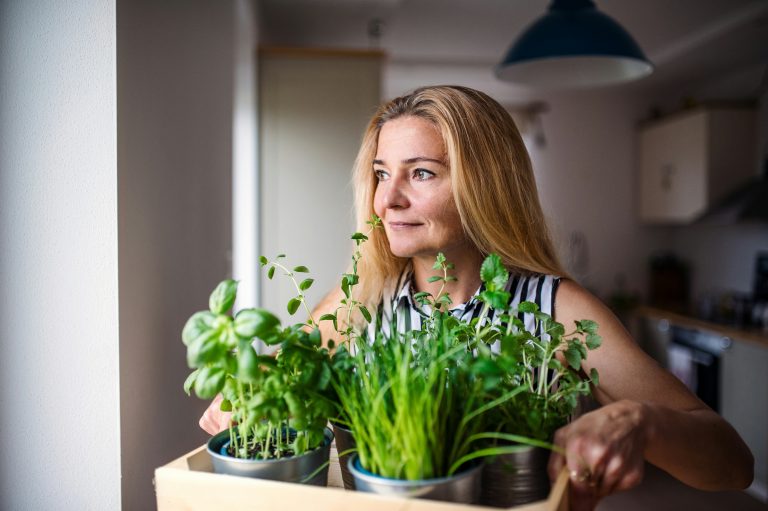
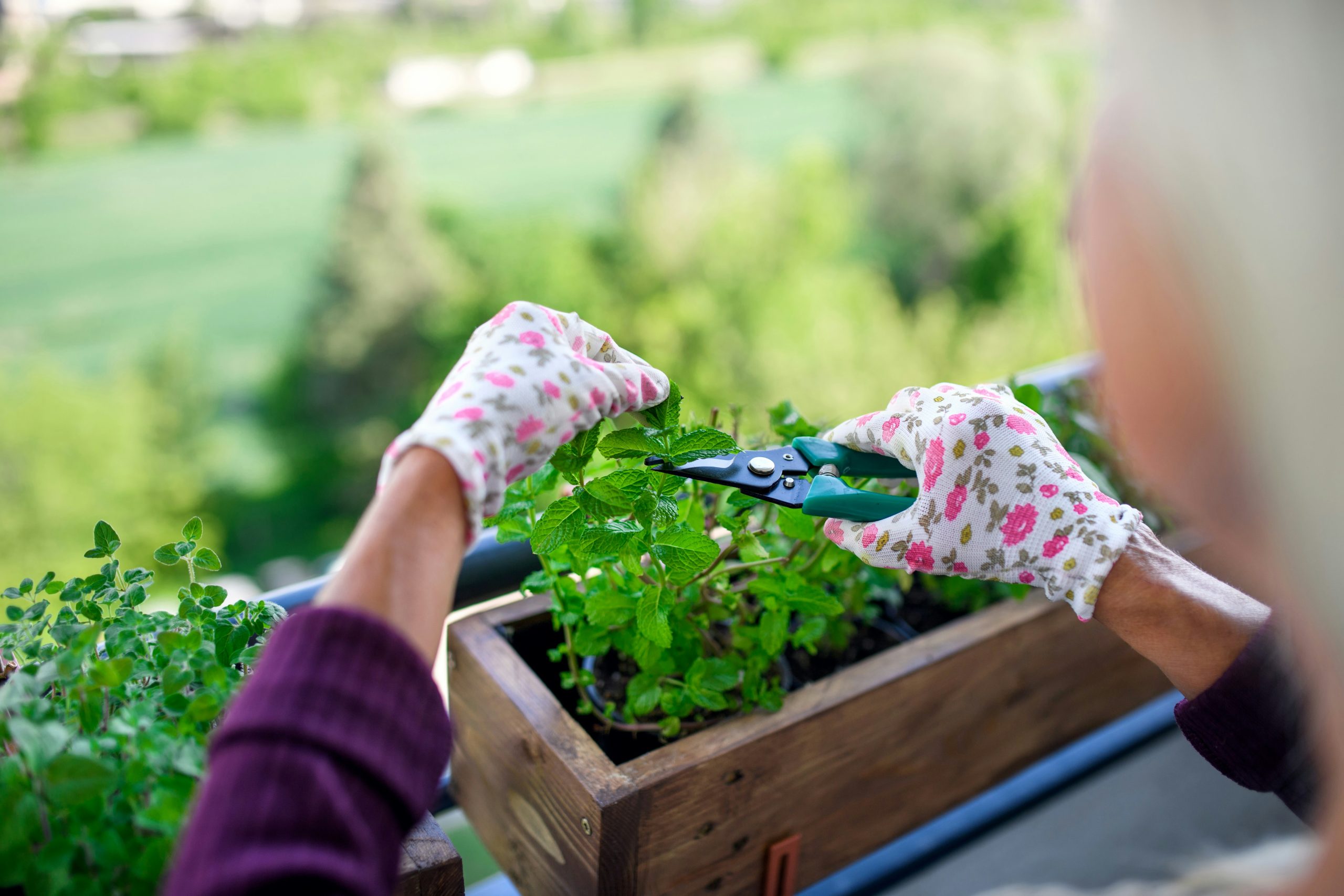
Herbs are the easiest entry point into container growing and work well in partial sun. Basil is the exception — it wants full sun. Parsley, chives, mint (keep mint in its own pot — it will take over), and coriander all do well in 3–5 hours. For more detail on indoor and balcony herb growing, see our guide to growing herbs indoors.
Quickest to Harvest: Radishes, Salad Greens, Peas
If you’re new and need a win fast, grow radishes. They’re ready in 25–30 days, require almost nothing, and will grow in a small container with as little as 3 hours of sun. They are the best possible first crop for a beginner because the feedback loop is short and the failure mode is minimal.
Salad greens (mixed leaf varieties, baby spinach, rocket/arugula) are similarly fast and can be harvested cut-and-come-again — snip the outer leaves and the plant regrows. One window box can produce regular salad for weeks.
Peas take slightly longer but are deeply satisfying to grow — they climb naturally, use vertical space efficiently, and the flavour of fresh peas from the vine is significantly better than anything from a supermarket.
Now that you know what to grow, our apartment homesteading guides cover exactly how to set up containers, mix soil, and get your first balcony crops producing — even as a renter.
Soil, Drainage, and Feeding for Container Vegetables
Never use garden soil in containers. This is the most important line in this section. Garden soil compacts in pots, kills drainage, and suffocates roots. It also often carries pests and disease. It will kill your plants. Use it in the garden; don’t put it in a pot.
Use a quality potting mix — labelled specifically for containers or vegetables. In the US, look for an all-purpose potting mix with added perlite or vermiculite for drainage. In NZ/AU, vegetable-specific potting mixes are widely available at garden centres. Avoid the cheapest options; the quality variation in potting mix is significant and it shows in plant health.
For large containers, you can extend your mix by volume: fill the bottom third with a layer of coarse material (chunky bark, crumbled polystyrene, or large perlite) and use good potting mix above that. This keeps the container lighter and improves drainage.
Feeding: Container vegetables exhaust the nutrients in potting mix faster than in-ground plants because watering leaches them out. Once plants are established and actively growing (typically 4–6 weeks after planting), feed with a balanced liquid fertiliser every 2 weeks through the growing season. For fruiting crops (tomatoes, peppers), switch to a higher-potassium feed once flowering begins — this supports fruit development rather than leaf growth.
When you have fruit scraps and veggie offcuts, composting is the long-game play for improving your soil over seasons — though I’ll cover that in a separate guide when it’s published.
Watering a Balcony Garden: The Most Common Beginner Mistake
The most common beginner mistake is inconsistent watering — not necessarily too much or too little, but wildly variable. Plants that dry out completely and then get drowned repeatedly develop stress, blossom drop, and poor fruit set.
The other common mistake is overwatering. Container vegetables need water when the top 2–3 cm (1 inch) of soil feels dry to the touch. Stick your finger in — if it’s still moist at that depth, leave it. If it’s dry, water thoroughly until it drains from the bottom.
On a sun-facing balcony in summer, you may need to water daily. In cooler weather or partial shade, every 2–3 days is often enough. Check the soil, not the calendar.
A few things that make balcony watering easier:
- Self-watering containers with a reservoir at the base reduce frequency and even out moisture delivery. They’re worth the extra cost for tomatoes.
- Grouping pots together reduces moisture loss from individual containers and creates a slightly more humid microclimate.
- Mulching the top of containers with a thin layer of straw or bark chip slows evaporation significantly.
Watering in the morning is preferable — it gives foliage time to dry before evening, which reduces disease risk.
Vertical Growing: Maximising Your Balcony Space
Most balcony gardeners think horizontally — they fill the floor and stop. The walls and railings are often completely unused, and that’s wasted growing space.
Vertical growing options that work for renters:
- Railing planters — clip-on or hook-over planters that attach to your balcony railing without drilling. Good for herbs, trailing strawberries, lettuce.
- Wall-mounted pocket planters — fabric or plastic pockets that mount on a wall or fence. Each pocket can hold a herb plant or a small salad green. A single panel can hold 12–20 plants in less than half a square metre.
- Tiered plant stands — freestanding, no fixing required, and they turn 0.5 sqm of floor space into 3–4 planting levels. Useful for a mix of herbs and greens.
- Trellises — a freestanding trellis propped against a wall gives peas, beans, and even cucumbers vertical space to climb. No drilling needed if it leans rather than mounts.
Vertical growing also improves air circulation around plants, which reduces fungal disease — a practical benefit as well as a space one.
For more on how all of this fits into a broader apartment-based food system, the urban homesteading for beginners guide covers the wider picture.
Renter Considerations: What to Check Before You Start
Growing on a rented balcony is completely viable, but there are things to check before you invest in a serious setup.
Read your lease. Most residential leases don’t explicitly prohibit container gardening, but some restrict what you can fix to exterior walls, railings, or the balcony surface. Know where you stand before you drill anything or use adhesive hooks.
Check the rules about water runoff. Watering a balcony garden generates drainage, and that water has to go somewhere. If it drips onto a lower balcony or public area, you may have a problem with neighbours or body corporate. Use drip trays under all containers and empty them after watering.
Soil and plant material. Some apartment buildings have restrictions on bringing soil and plants through common areas because of pest risk. This is uncommon but worth knowing.
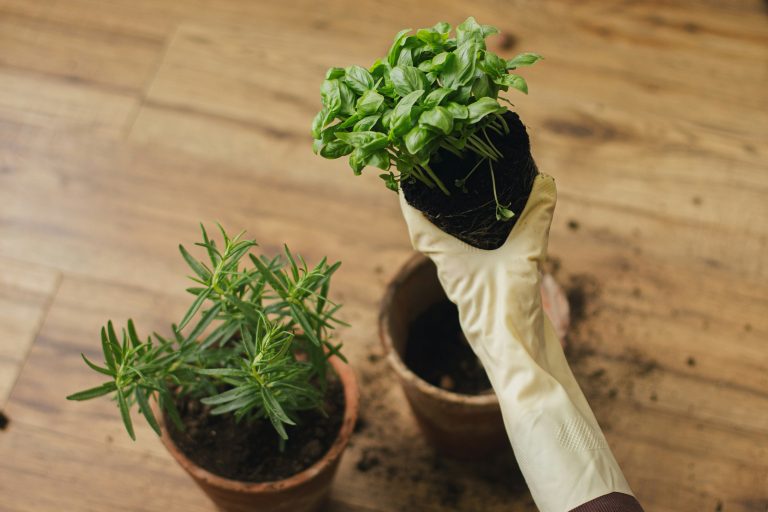
Seasonal removal. If you’re on a fixed-term lease, plan your growing season around your tenancy. Fast-growing crops like lettuce, radishes, and herbs can complete a full cycle in 6–8 weeks. Perennial herbs (rosemary, thyme, mint) you can take with you when you go — they’re in pots.
Weight and structural safety — as noted above, check with your building manager before setting up a heavy container system. This isn’t bureaucratic caution; it’s genuinely important.
Container gardening on a balcony doesn’t require land, a big budget, or homeowning. It requires understanding your space, choosing the right crops for what you’ve got, and not using garden soil in your pots. Start small — two or three containers in your sunniest position — and grow from there.
Ready to start with two or three containers and build from there — the Starter Kit gives you the full system, from container setup to preserving your harvest.
The No-Land Homesteader’s Starter Kit is a 45-page practical guide — container gardening, composting in small spaces, seed-saving, fermentation, and food preservation — built specifically for renters and apartment dwellers. $17.